1 / 10
About this piece
This piece is intended primarily as textile wall art. If displayed on the floor, regular or heavy foot traffic is not recommended.
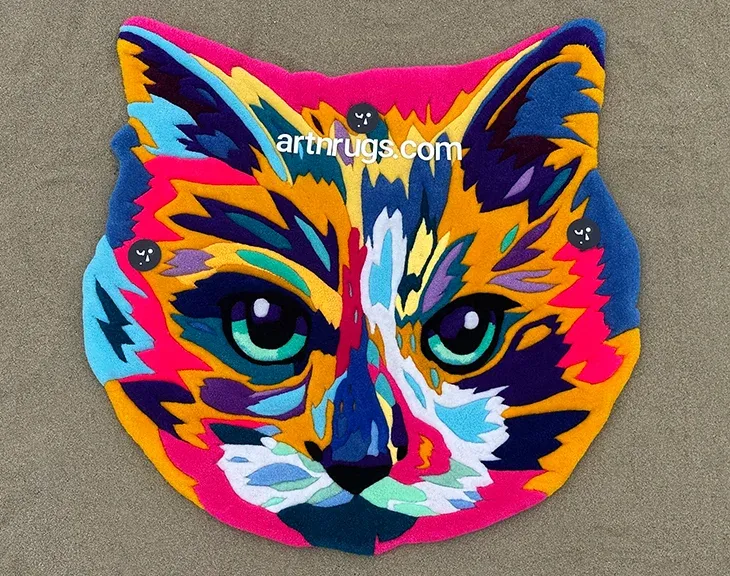
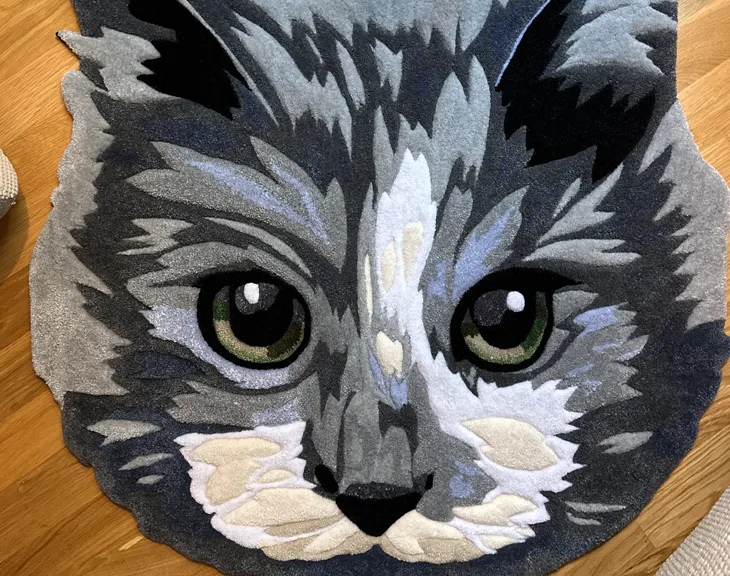
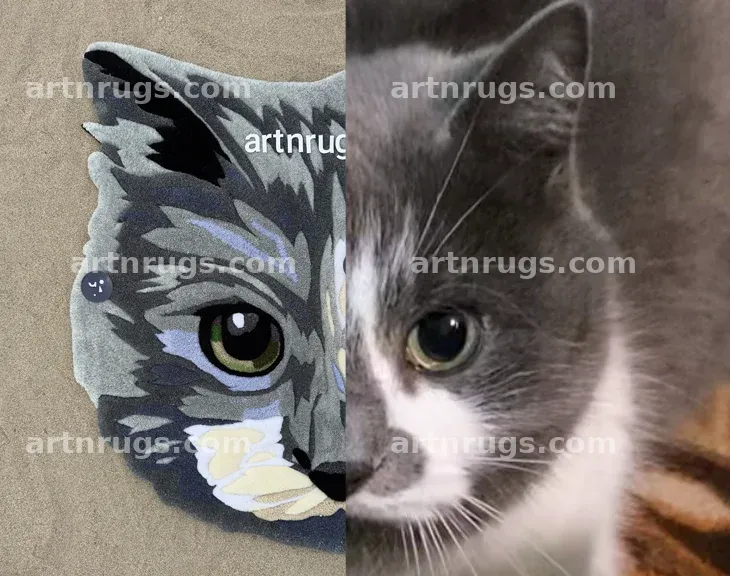
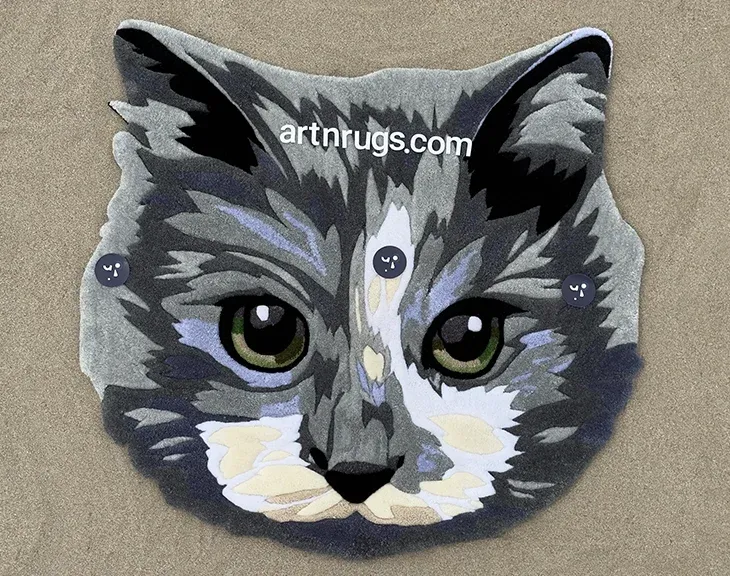
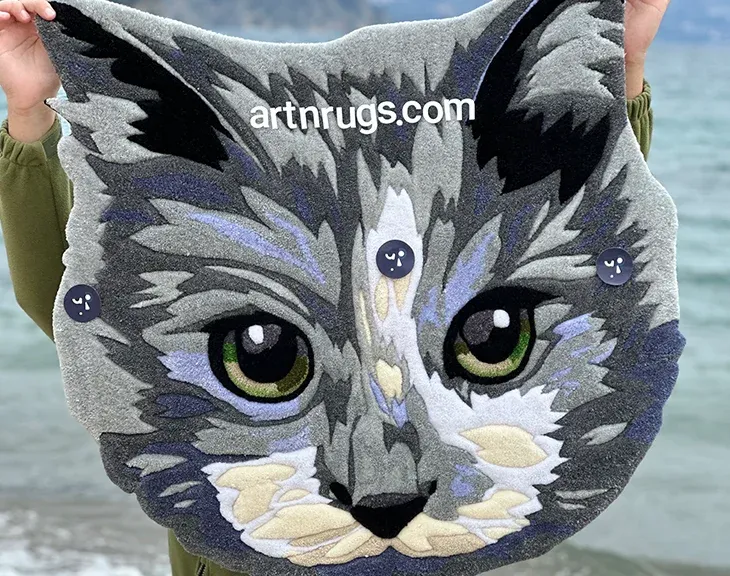
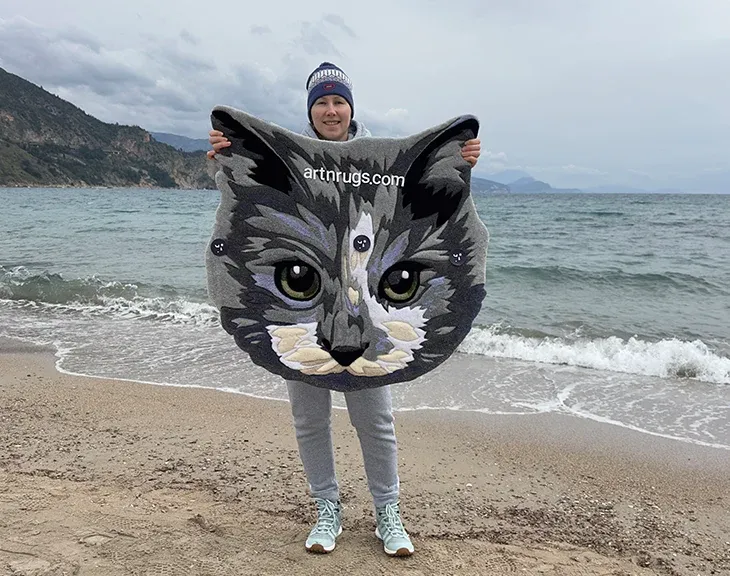
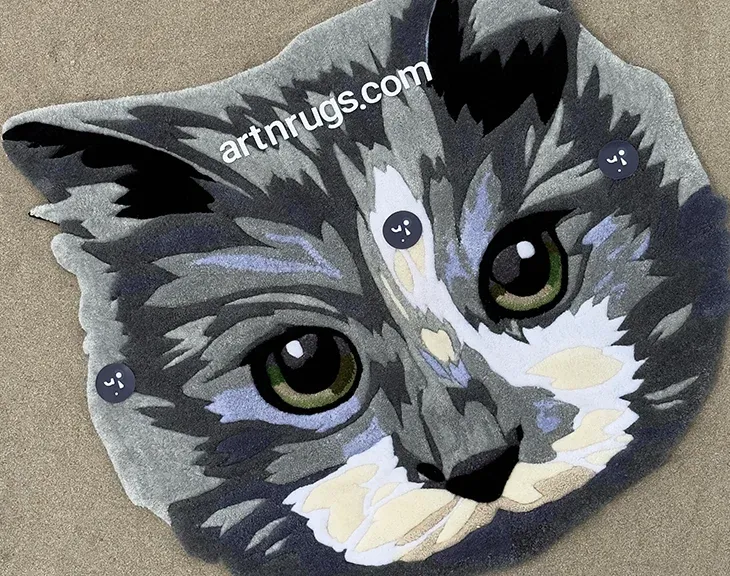
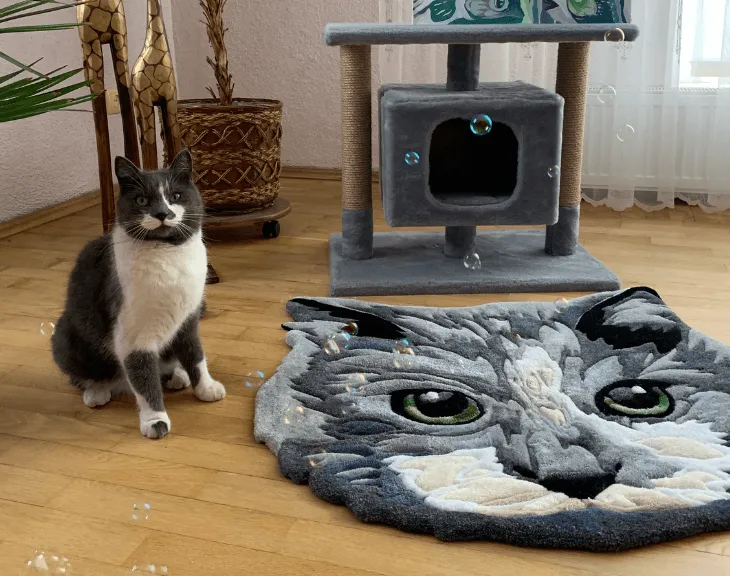
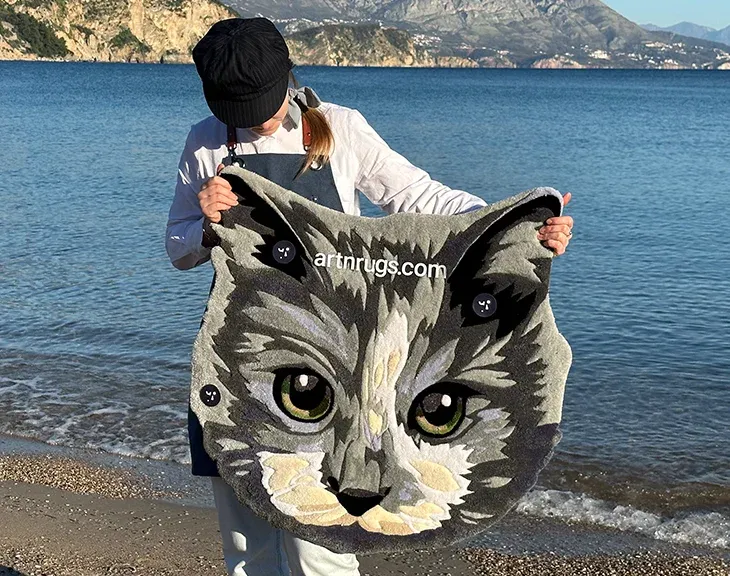
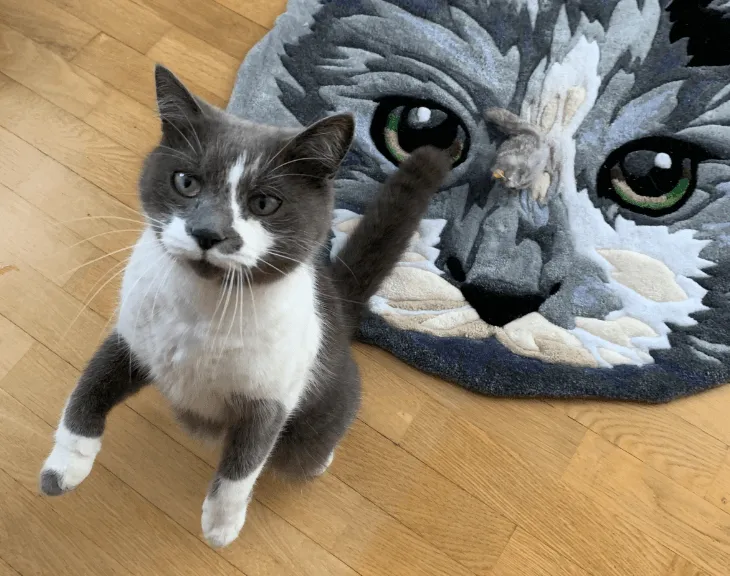
Her name is Hruma. She is a gray shorthair who belongs to one of our customers, and the square you see here is her face rendered in acrylic yarn. Set the finished piece next to the snapshot it came from and the opening photograph plays a trick on the eye: cat on one half, rug on the other, and you keep swapping which is which. That is what a custom pet rug means in this studio. Nothing is printed onto fabric. Your dog or your cat gets built up strand by strand, one pass of color after another.
Work begins with whatever picture is already on your phone. Ksenia Derr draws it by hand into a color-accurate mockup, pulls yarn to match the coat your animal actually has, and no tufting starts until you sign off on that drawing. Acrylic yarn is then driven through a stretched textile base. Once the adhesive backing has cured, the piece comes off the frame, and the pile is leveled and then sculpted in stages so every marking in the fur stays sharp. A non-slip textile layer keeps it stable when displayed on the floor. Would you rather hang it? Say so with your order and mounting loops go onto the back.
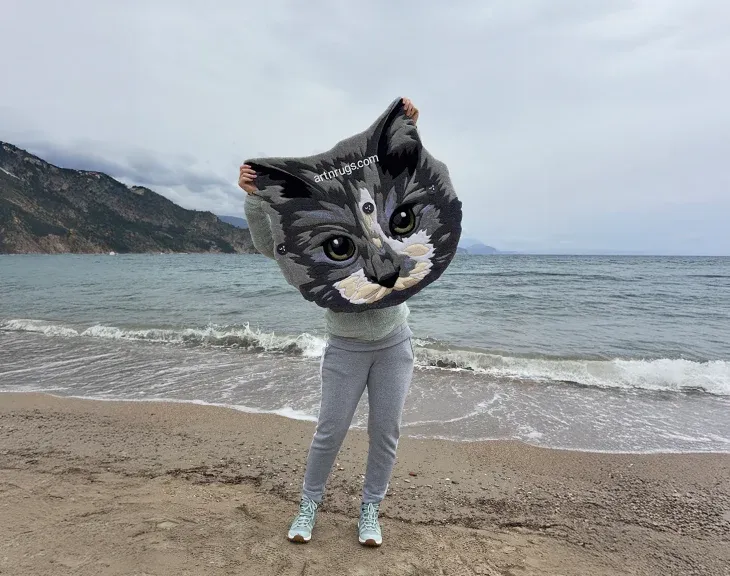
This portrait runs 33 × 33 in and weighs 5.25 lbs: substantial enough to lie flat, light enough for a picture hook. Every drawing is made from scratch, so the format is yours to pick and the quote tracks the area. In this one, that comes to $360.
Care is undramatic. Run a lint roller over the pile, vacuum on a low setting when it needs more, and hand anything deep to a professional cleaner so the colors keep their edge.
Which photos work
Your phone is plenty. The face has to be sharp and lit, and window light beats a flash every time. Eyes in focus, head taking up a good share of the frame, coat readable against whatever sits behind it. Several shots from different angles help, because the more of the animal we can see, the closer the drawing lands.
A print out of a shoebox or an old film photograph is welcome too, and this is exactly where a studio parts ways with a print shop. The rug is born as a drawing by Ksenia Derr, not as your image file. Eighteen years of painting sit behind that drawing; she works the likeness up by hand and sends it back to you, so whatever the photo leaves unclear gets settled between the two of you before a single strand goes in.
If your pet has died and the only picture is a bad one, tell us in your first message. We take those commissions often, and it is the drawing stage that carries them.
The one situation where we usually ask for a second shot is a dark dog on a dark couch, because the drawing has to find where the coat ends. Unsure about yours? Send it over and you will hear back before any money changes hands.
Which animals
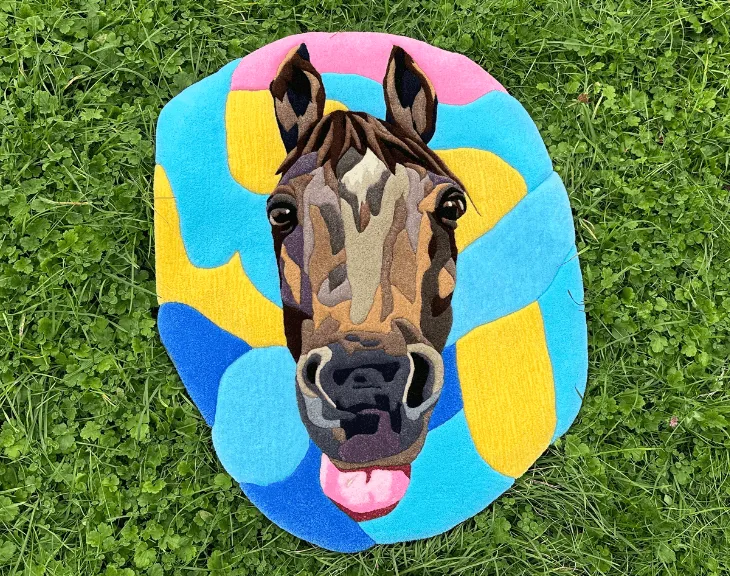
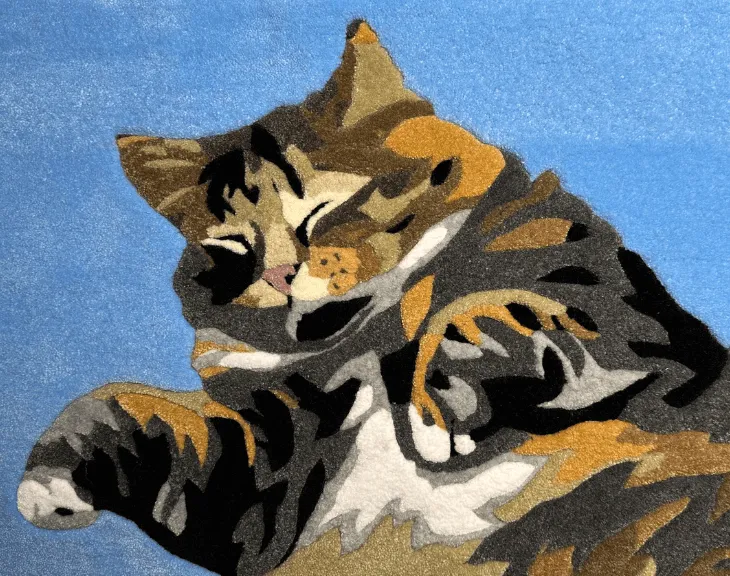
Dogs, cats and horses come up most often, and those are the portraits on this page. Species is not the deciding factor though: any pet can be tufted, since the piece starts as a drawing rather than as a print. A rabbit, a parrot, a goat, something stranger still. Send the photograph and we will tell you what the drawing can do with it.
Framing gets settled up front: just the face, or the entire animal including tail and paws.
Two pets on a single rug is the one request that comes back as a question. Two animals cannot sit as a proper portrait at 33 × 33 in, so we point you toward a bigger format and quote by area instead of crowding both into the standard square.
The animal does not have to show up alone, either. A favorite toy, a collar, a bowl, something that belonged to them can be drawn in alongside. Hardly anyone thinks to ask. It costs nothing to mention when the photo goes out, and it adds nothing to the making time.
Formats and pricing
Portraits open at $360. Cost follows the area, so what really matters is how much animal you want inside the frame.
| Format | Fits | Starting at |
|---|---|---|
| 33 × 33 in | A single pet, head and shoulders | $360 |
| 59 × 32 in | One animal, nose to paws | $475 |
| Anything else | Two pets, or a large dog | Quoted |
None of those are guesses; they are what pieces already finished have cost. Because no design is dropped into a template, any size is on the table, and the quote reaches you before work starts.
Timeline
Count on four business days at the frame, plus five to ten days in transit, with free tracked shipping across the US.
That clock starts the day you approve the mockup, not the day you send the photo. Ahead of it sits a short back and forth: we hand-draw your photograph into a color mockup, match yarn to the real coat, and send it for review. Changes belong to that stage and nowhere else, because the design is locked the moment tufting begins.
You get photographs and a video of the finished rug before the box leaves the studio.
Want to watch a commission travel from first photograph to finished piece? One is documented step by step in how a pet portrait rug is made from a photo, with clips shot at the frame.
Why tufted beats printed
A printed pet rug is a photograph sitting on cloth. This is a different object.
Each shade here arrives as its own strand of acrylic yarn, pushed through a stretched textile base by a hand-held gun, one pass of color at a time. Shearing then happens in stages: level first, then shaped feature by feature, right down to the rim of an eye. That is why fur reads as fur instead of as a flat picture of fur, and why the surface has a depth your hand can find.
Shopping around? Price gives the game away fastest. Any pet rug under $100 was printed. Hand tufting cannot happen at that number, since the drawing, the tufting and the shearing eat days of labor before anyone counts materials.
It is also why a hand-tufted piece can be mended years down the road. The hands that made it can re-tuft a patch, and the mockup lives on in the studio, so the design can be run again.
The whole case, backing against backing and edge against edge, is laid out in hand-tufted or printed: telling a real pet rug apart.
Punch needle gets mixed up with tufting constantly. It is a hand tool rather than a motorized one, and it leaves a different surface behind. The two sit side by side in tufting vs punch needle.